MOSFET
Diodes
Bridge Rectifiers
Transistors
GaN
IPM
PV Modules
Voltage Regulators
AC-DC
DC-DC
Synchronous Rectifiers

Semiconductor power devices are the core enabling technology for automotive electrification and intelligence. With the increasing penetration rate of new energy vehicles and the growing demand for high-voltage fast charging, SiC devices will gradually replace traditional silicon-based devices, promoting the development of automotive electronic systems towards higher efficiency, smaller size, and longer range. In the future, innovation in power devices will focus on materials, packaging, and intelligent integration to meet the comprehensive performance and cost requirements of the automotive industry. The application of semiconductors in automotive electronics can be systematically divided into the following core areas: power systems, intelligent driving, body and chassis electronics, communication and storage. The application of semiconductors in automotive electronics is shifting from "functional realization" to "value creation", and its importance is increasingly prominent.
| Physical Product | Product Blurb | |
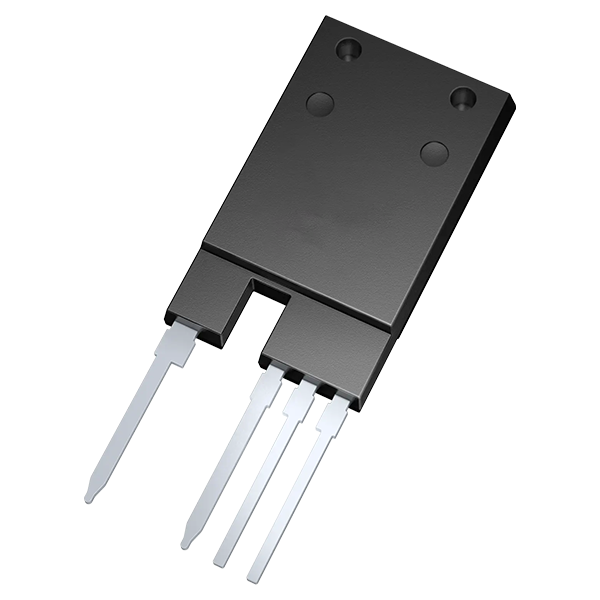
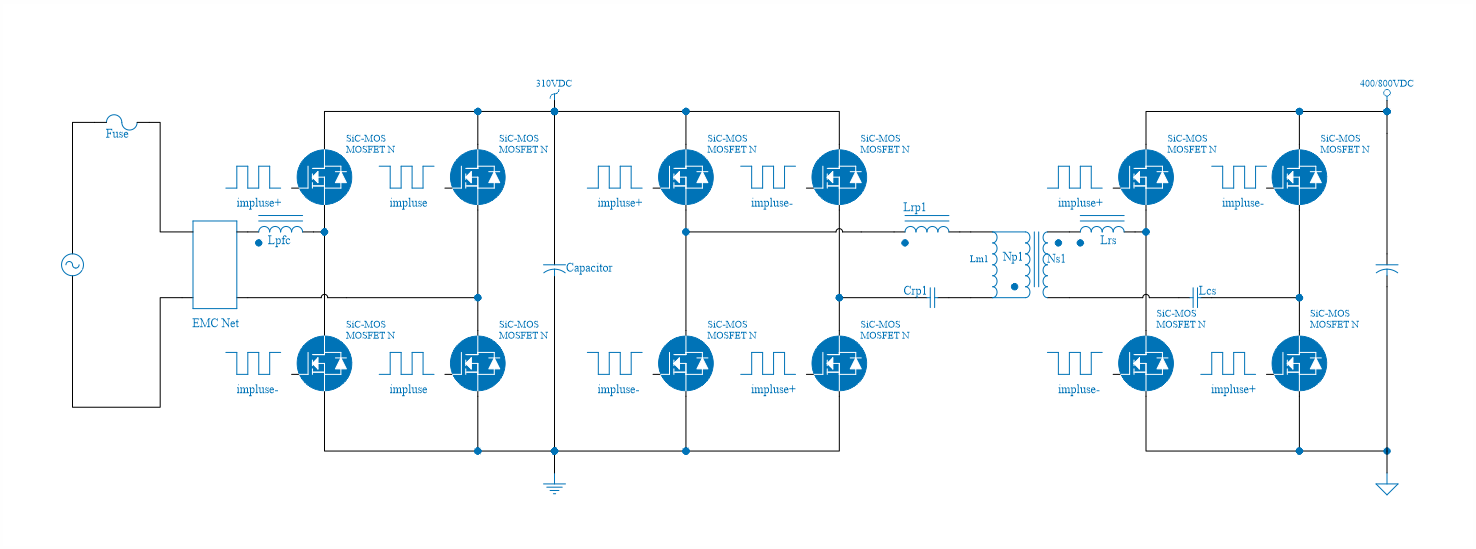
OBC: Convert alternating current to direct current to charge the power battery. Topology: LLC resonance, etc. Device selection: SiC SBD, SiC MOS. PFC:SiC-SBD,SiC-MOS。 PWM:SiC-MOS。 Advantages: High frequency, high efficiency, SiC can reduce charging time and improve power density. | ||
| Recommend | Circuit Diagram | |
| SiC-SBD |
| |
| SiC-MOS | ||
| Physical Product | Product Blurb | |
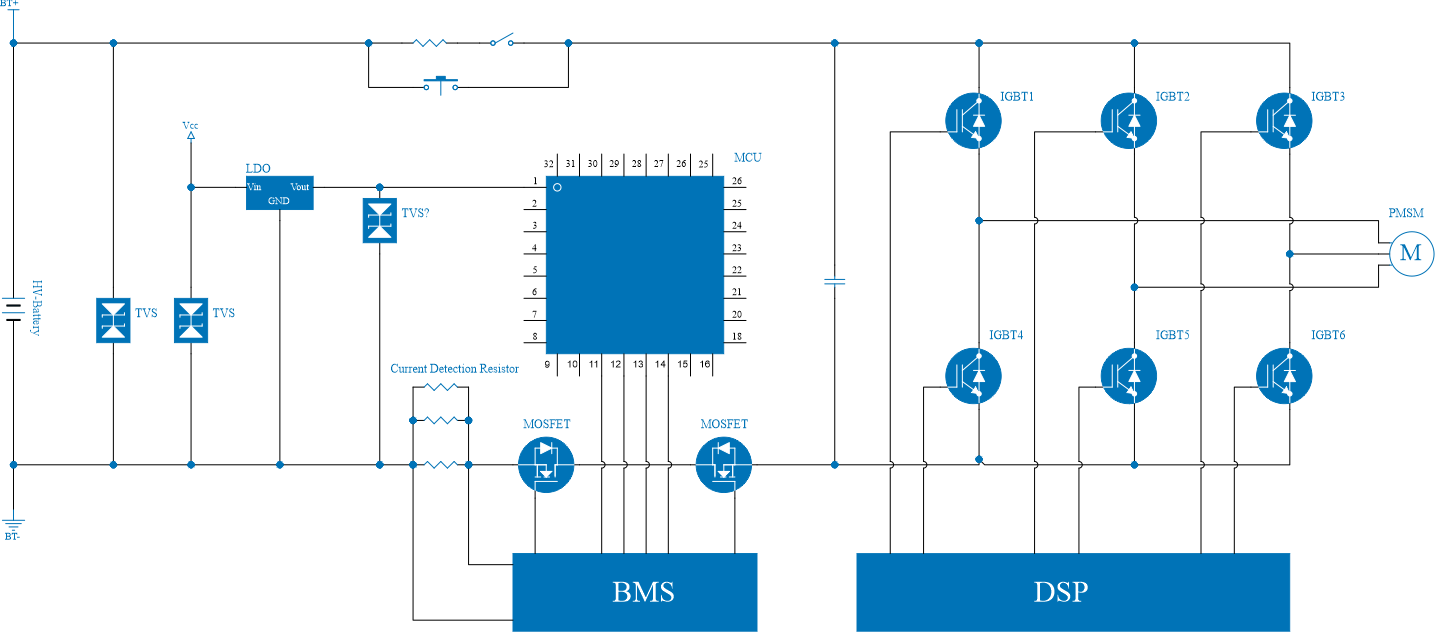
Function: Convert the DC power of the battery into AC power to drive the motor. Device selection: SiC MOSFET and IGBT are mainstream solutions. Advantages of SiC: High frequency switching reduces energy loss, improves system efficiency (about 5-10%), reduces volume and weight, and increases range (such as Tesla Model 3 using SiC MOSFET). IGBT application: Traditional solutions have lower costs and are suitable for mid to low end vehicle models. | ||
| Recommend | Circuit Diagram | |
| LDO |
| |
| TVS | ||
| Physical Product | Product Blurb | |
Function: Replace traditional hydraulic systems with motor assisted steering. Device requirements: MOSFET is used for motor drive, requiring high reliability and anti-interference ability | ||
| Recommend | Circuit Diagram | |
| Pending | ||
| Pending | ||
| Pending | ||
| Pending | ||
| Pending | ||
| Physical Product | Product Blurb | |
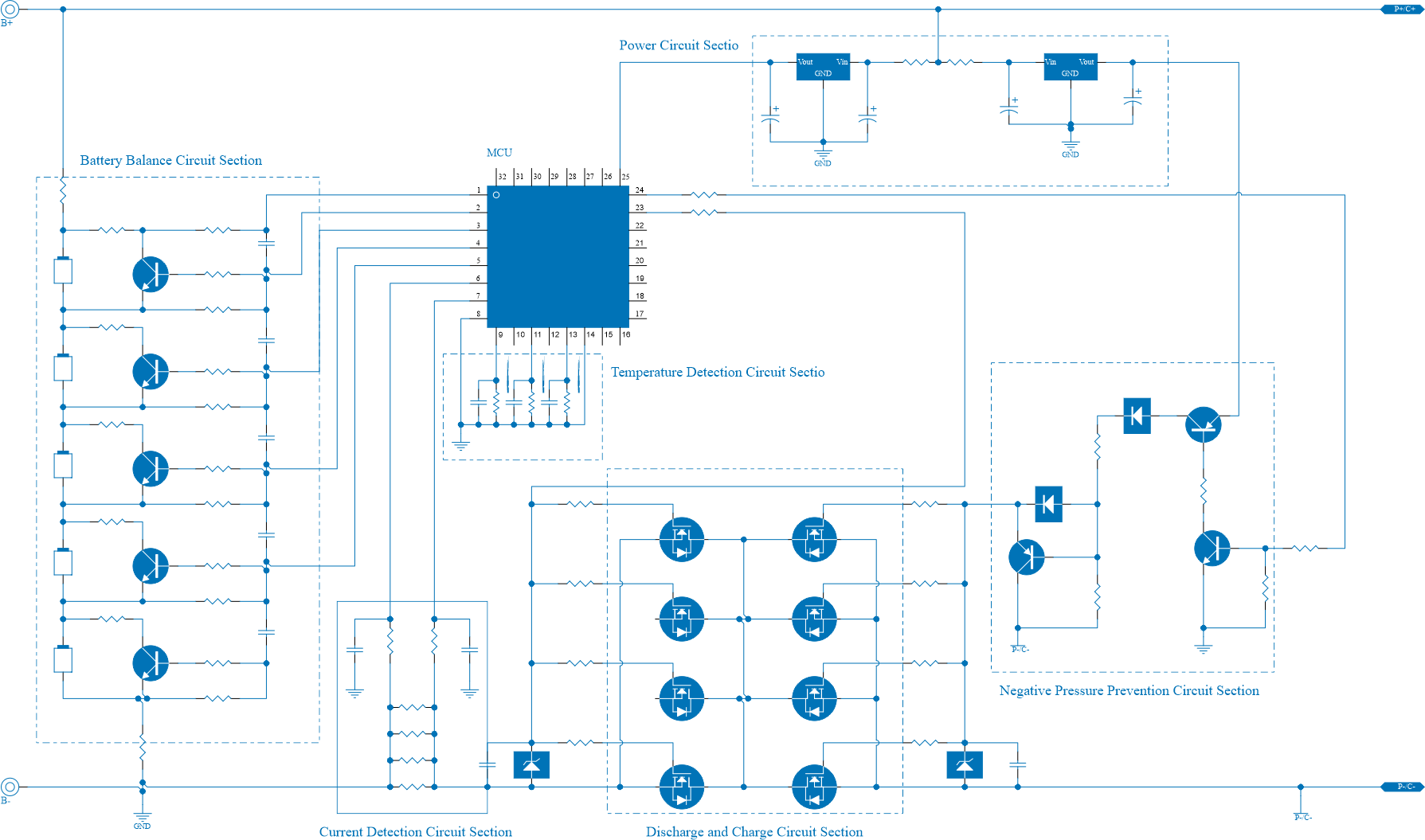
The BMS system is a comprehensive control system responsible for monitoring and managing the operational status of rechargeable batteries. Its main function is to supervise and ensure the safe operation of energy storage battery equipment. BMS is widely used in fields such as electric vehicles, energy storage systems, solar panels, etc. MOSFET transistors, as the core power devices in BMS circuits, play a crucial role in ensuring the reliability of charging and discharging processes. NH Semiconductors SGT technology MOSFETs are widely used in interactive power converters, battery management systems (BMS), motor drivers, and other fields due to their advantages of low Rds (on), small Crss capacitance and Qg, fast switching speed, and low losses | ||
| Recommend | Circuit Diagram | |
| LV-MOS |
| |
| Small-Signal | ||
| BJT | ||
| SW-Diode | ||
| Zener-Diode | ||
| Physical Product | Product Blurb | |
Function: Supports start stop, energy recovery, and auxiliary driving. Device selection: MOSFET and IGBT are used for 48V-12V bidirectional DC-DC converters. | ||
| Recommend | Circuit Diagram | |
| Pending | ||
| Pending | ||
| Pending | ||
| Pending | ||
| Pending | ||